

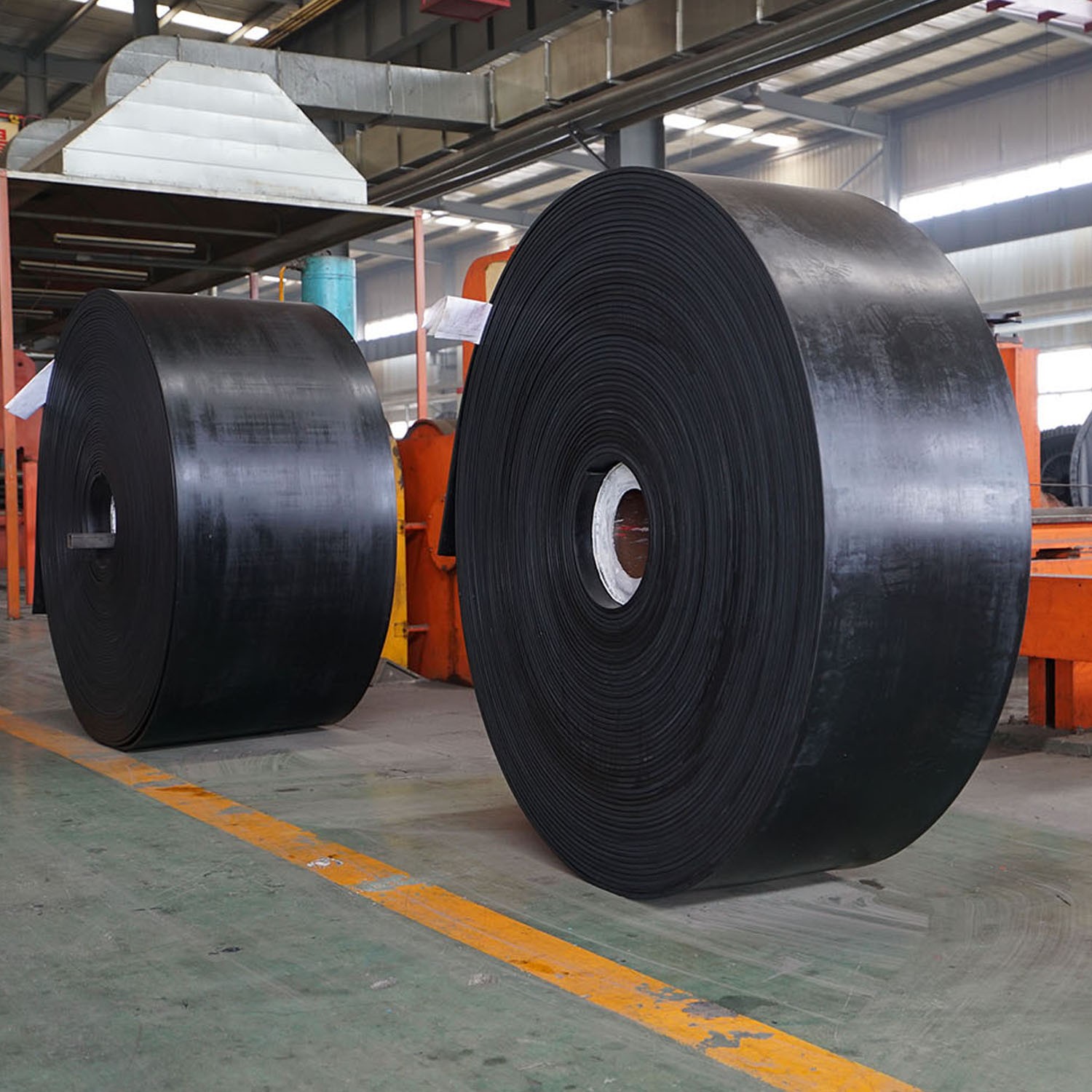
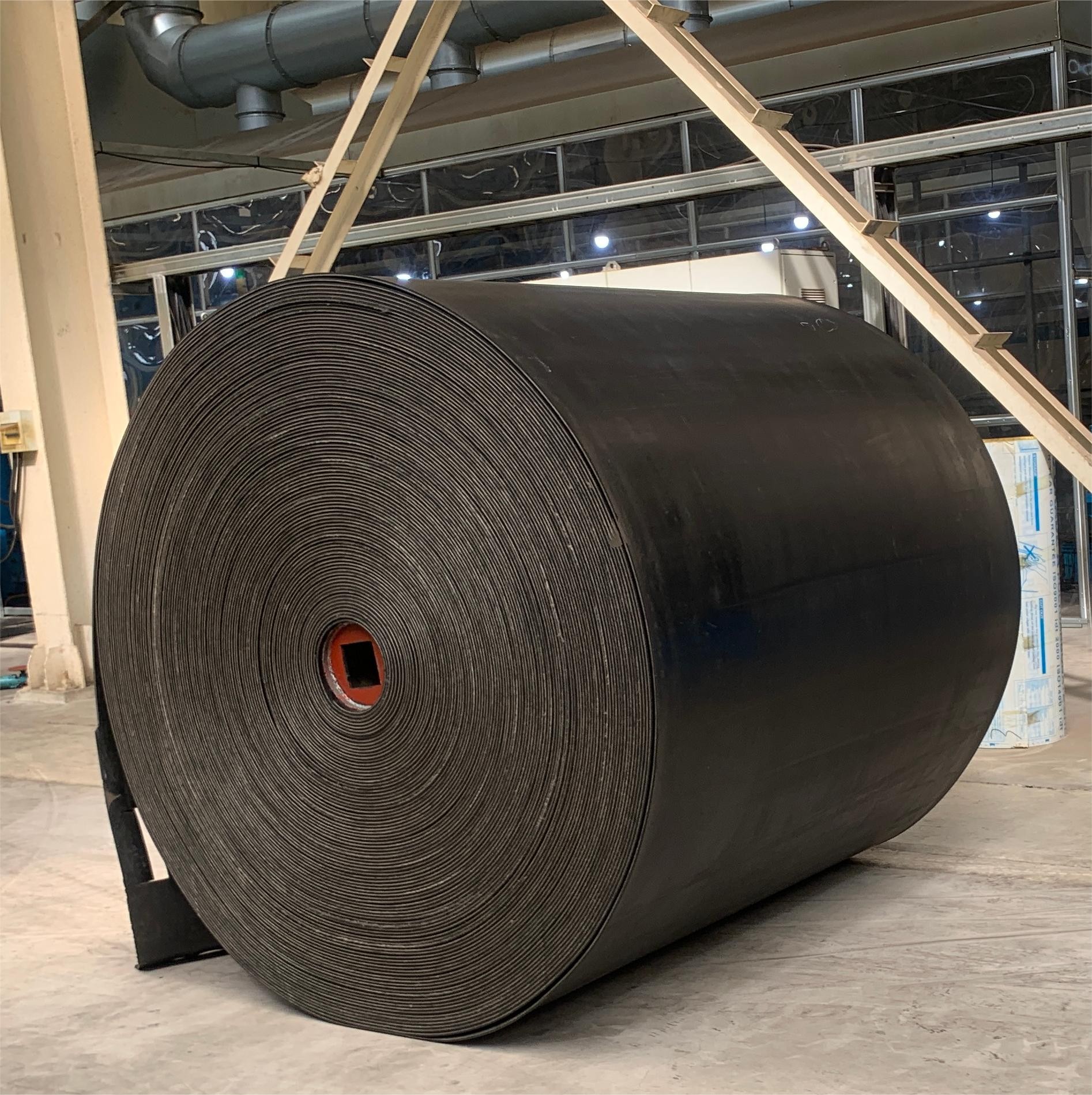
How to choose the number of fabric layers of the conveyor belt?
The selection of the number of conveyor belt fabric layers needs to consider a number of factors, as follows:
Conveying material characteristics
- Weight and particle size: conveying heavy, large particle size materials, such as ore, coal, need to choose multi-layer conveyor belt to increase strength and carrying capacity, may be 6 layers or more; Conveying light and small particle size such as flour, sand, optional 2-4 layers of conveyor belt.
Hardness and sharpness: Conveying such as glass fragments, metal scraps and other sharp, hard materials, easy to wear and Pierce the conveyor belt, should choose more than 4 layers of thicker multi-layer conveyor belt, in order to provide adequate puncture resistance and wear resistance.
Conveying system parameter
- Conveying distance: long distance conveying, the conveyor belt under large tension, need to increase the number of fabric layers to ensure strength, to prevent tensile deformation and fracture, such as more than 500 meters of long distance conveying, can choose 4-6 layers and more conveyor belt.
- Conveying speed: Fast speed will make the conveyor belt withstand greater impact and centrifugal force, optional conveyor belt with more layers, such as speed greater than 3m/s, can consider 4 layers and more conveyor belt.
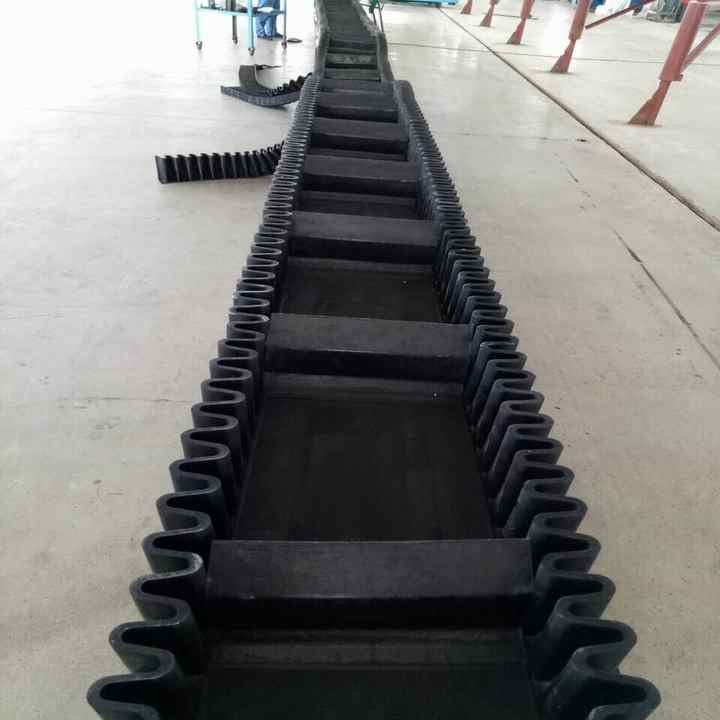
- Conveyor type: large Angle rib conveyor, the base belt needs to withstand greater tension and lateral force, generally requires at least 5-6 layers of core.
Working environment
- Temperature: in high temperature environment, the strength of the conveyor belt will decrease, low temperature will make it hard and brittle, in high temperature environment such as steel factory, you can choose more than 4 layers of high temperature resistant conveyor belt; In cold areas, it is also necessary to choose the right number of layers to ensure flexibility.
Humidity and chemical corrosion: In humid or chemically corrosive environments, such as electroplating factories and chemical plants, in addition to the selection of corrosion-resistant materials, the number of fabric layers can be appropriately increased, generally 4 layers or more, to enhance the protective ability of the conveyor belt.
Equipment factor
- Drum diameter: The diameter of the drum is small, the bending degree of the conveyor belt is large, easy to fatigue damage, if the diameter of the drum is less than 200mm, the thinner conveyor belt of 2-4 layers should be selected to improve flexibility.
- Tension: the tension force is large, the conveyor belt needs enough strength to withstand, and the conveyor belt with many layers can be selected. If the tension force is large, the conveyor belt with 4 layers or more can be selected.
Cost and efficiency
- Cost: When the number of layers increases, the cost of conveyor belt rises, the budget is limited and the conveying requirements are not high, 2-3 layers of standard thickness conveyor belt can be selected.
- Efficiency: Although the multi-layer conveyor belt has a strong carrying capacity, it may affect the running speed and flexibility. For fast conveying occasions, a relatively thin conveyor belt of 2-4 layers can be selected under the premise of ensuring the carrying capacity.